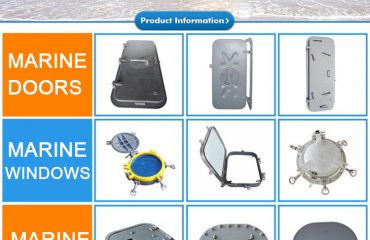


Reliable marine doors are developed with targeted structural upgrades to solve common sea environment challenges. Unlike industrial or residential doors, every structural detail is optimized for pressure resistance, waterproof sealing, vibration tolerance, and long-term anti-corrosion performance. Several key design elements define a qualified marine door system.
1. Reinforced Monocoque Frame Structure
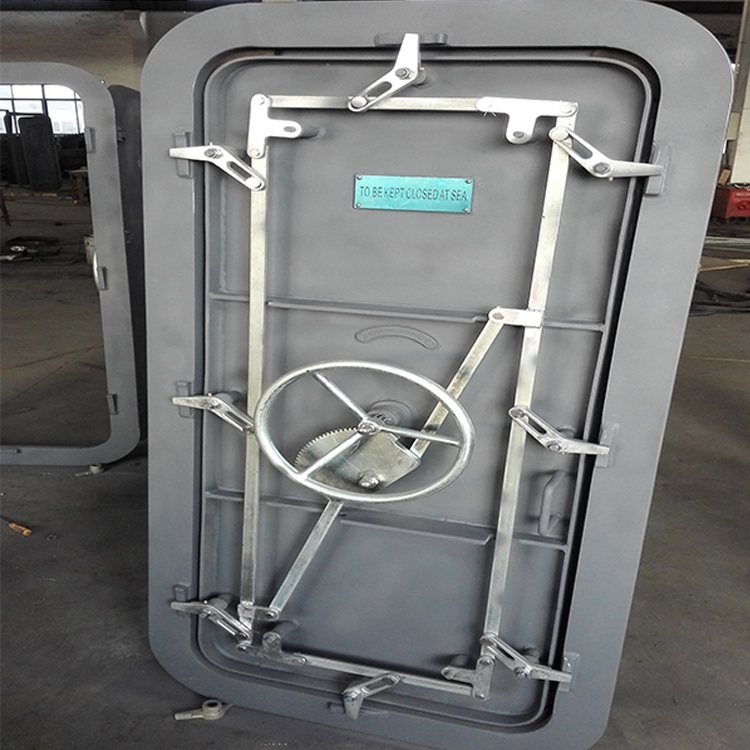
Most standard land-based doors use thin, hollow frames that cannot withstand continuous marine vibration and water impact. Qualified marine ship door adopts an integrated monocoque frame design, forged with integral marine-grade alloy plates. This one-piece structure eliminates weak welding seams that are prone to cracking and water penetration. The thickened frame edge also enhances overall rigidity, preventing deformation when vessels tilt or endure strong wave impacts.
2. Multi-Layer Graded Sealing System
Watertight performance is one of the most critical indicators for marine door usability. High-quality models use a dual or triple-layer compression sealing structure, different from the single rubber strip used on ordinary doors. The main sealing layer adopts aging-resistant EPDM rubber, while the auxiliary buffer layer absorbs vibration and offsets minor structural deviations during ship deformation. This layered design ensures stable watertight and airtight performance even after years of repeated opening and closing.
3. Sloped Drainage and Anti-Pooling Structure
Deck areas often accumulate splashed seawater and rainwater during voyages. Reliable marine doors integrate a built-in sloped drainage groove and anti-pooling sill structure. The low-angle guiding design quickly drains residual water outside the cabin, effectively avoiding water accumulation that causes seal corrosion and mold growth. This simple but practical structural design greatly extends the service life of door sealing components.
4. Vibration-Resistant Reinforced Hinge Design
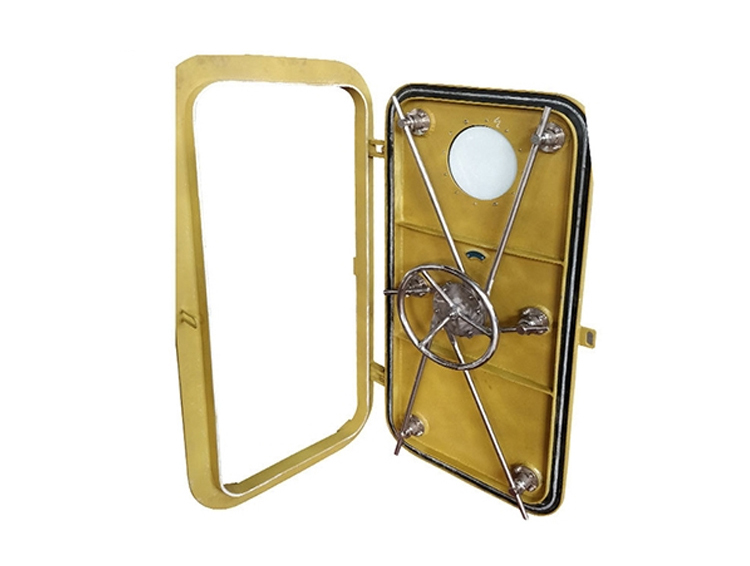
Ships generate continuous engine vibration and structural shaking during navigation, which can loosen ordinary door hinges over time. Professional marine door structures adopt thickened stainless steel hinges with fixed anti-loosening bolts. Some heavy-duty models use multi-point bearing hinge structures to disperse pressure, ensuring flexible opening and closing without jamming or loosening under long-term vibration conditions.
Standard Technical Parameters of Qualified Marine Ship Doors
Structural advantages are reflected in specific testable parameters. The following table lists mainstream industry technical standards for ocean-going ship door structures, covering pressure resistance, sealing performance, and environmental adaptability, providing objective compliance basis for shipyard selection and inspection.
| Structural Performance Index | Ocean-Going Vessel Standard Value | Testing Condition |
|---|---|---|
| Maximum Water Pressure Resistance | ≥0.15 MPa | Static water pressure 30-minute test |
| Air Tightness Performance | No air leakage under 500Pa pressure | Constant pressure sealing test |
| Vibration Resistance Durability | 100,000 opening/closing cycles without deformation | Simulated marine vibration environment |
| Working Temperature Adaptation | -40°C to +70°C structural stability | Extreme temperature alternating test |
| Salt Corrosion Resistance | 1000-hour salt spray test without surface failure | ISO 9227 marine standard |
All parameters follow ISO and classification society industry norms, ensuring that the ship door can maintain stable structural performance throughout long-term offshore operations and adapt to complex and changeable marine weather conditions.
Common FAQs About Marine Ship Door Structural Design
1. Why is integrated frame design essential for marine doors?
Welded spliced frames are prone to micro-cracks under continuous ship vibration and wave impact. The integrated one-piece frame avoids structural weaknesses, maintains long-term shape stability, and ensures consistent sealing performance in various sea conditions.
2. What makes multi-layer sealing better than single sealing for marine use?
Single rubber seals easily age, harden or deform under salt spray and temperature changes. The multi-layer structure combines waterproof, buffer and anti-aging functions, effectively compensating for tiny structural displacements and maintaining long-term watertight reliability.
3. Can industrial waterproof doors replace professional marine ship doors?
No. Industrial waterproof doors are only designed for static indoor environments and lack vibration resistance, anti-corrosion structure and extreme temperature adaptability. They cannot withstand dynamic wave impact and long-term marine erosion, and do not meet vessel safety certification requirements.
4. How does drainage structure improve marine door durability?
Residual water accumulation accelerates rubber seal aging and metal frame rust. The built-in drainage structure quickly discharges seawater and rainwater, keeping the door sill and sealing area dry, greatly reducing daily wear and extending overall service life.
5. Do different ship types require different door structures?
Yes. Ocean-going cargo ships and passenger ships require higher pressure resistance and anti-corrosion grades, while inland vessels adopt simplified but standardized structural designs. Professional structural matching according to navigation scenarios ensures both safety and cost-effectiveness.
At the end of the day, the unique structural designs of qualified marine doors are what make them reliable in harsh sea environments. Every frame reinforcement, sealing layer, and drainage detail is tailored to solve real marine operation pain points. Choosing a properly structured ship door is not just a component purchase, but a key investment in vessel navigation safety and long-term operational stability.