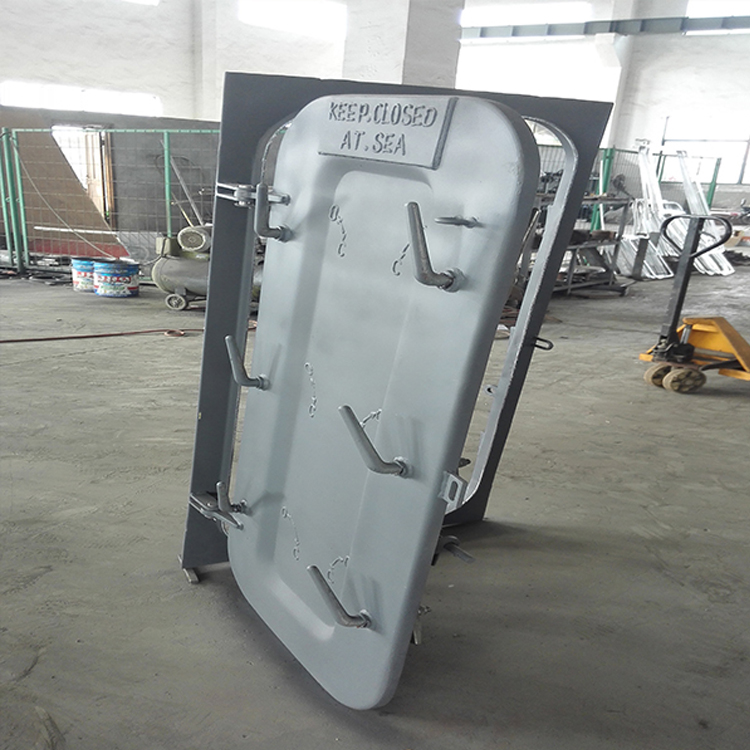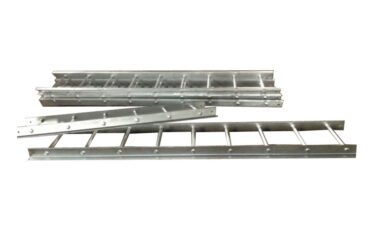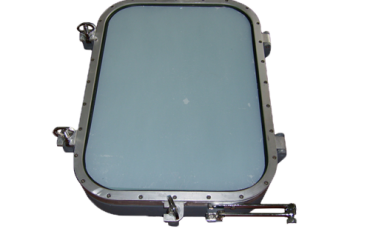


If you’ve ever ordered doors for a ship, you’ve probably seen the terms watertight and weathertight thrown around. They sound similar. Many buyers assume they’re the same thing and pick whichever is cheaper. That’s a mistake that can cost real money, and in some cases, put the crew at risk. So let’s clear this up. The two doors do very different jobs, and knowing which one fits which location is half the battle.
Why the distinction actually matters
Let’s be honest — on paper both doors look like heavy metal rectangles with a handle. But the way they’re built and tested is completely different. A watertight door is designed to stop water from moving between compartments when the hull is damaged. A weathertight door only has to keep out rain, spray, and light waves. Fit the wrong one and you could fail a class survey, or worse, have a flooding issue you can’t control. Understanding the difference isn’t pedantry — it’s basic safety.
What “watertight” really means
Watertight Marine Doors are built to withstand a significant water pressure head. In plain terms, they can hold back a deep column of water pressing against them. They use rigid gaskets, strong dogs and wedges, and a heavy frame. When closed properly, they form a seal strong enough to prevent water passing through into the next compartment. These doors usually appear on bulkhead decks, watertight bulkheads, and areas where a flood could spread if the door weren’t there.
What “weathertight” really means
Weathertight Marine Doors have a much simpler job. They’re meant to stop the weather from getting in — wind, rain, spray, and sea water splashing over the deck. They don’t need to hold back a column of water. Their gaskets are softer, their seals lighter, and their closing hardware simpler. You’ll find them in accommodation entrances, wheelhouses, and other exposed areas that still need to keep the weather out without bearing structural water load.
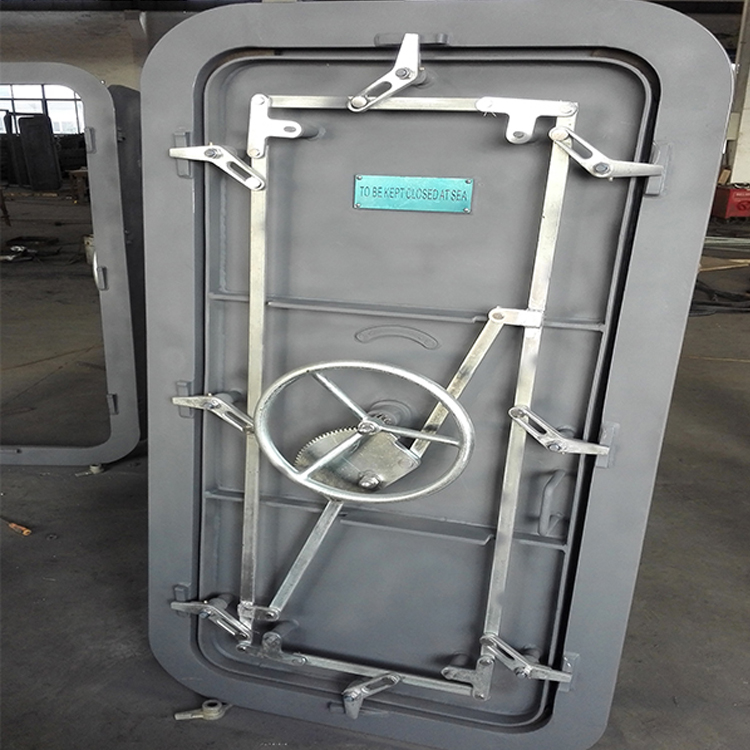
A side-by-side look at the two doors
To make the difference concrete, here’s a quick comparison table. Use it as a checklist when you review a spec sheet.
| Feature | Watertight Door | Weathertight Door |
|---|---|---|
| Primary job | Stop water transfer between compartments | Keep rain, spray and wind out |
| Test standard | Held against a defined water pressure head | Weathertightness / hose test only |
| Gasket type | Rigid, high-compression | Softer, lighter seal |
| Closing hardware | Multiple dogs, wedges, heavy handles | Simpler latching mechanism |
| Frame strength | Heavy duty, reinforced | Moderate, lighter build |
| Typical locations | Watertight bulkheads, lower decks | Accommodation, wheelhouse, exposed entries |
| Classification rules | Stricter, SOLAS-driven | Less stringent, location-based |
How SOLAS rules fit into the picture
SOLAS is the backbone here. It lays out exactly where watertight doors are mandatory and how they must perform. For passenger ships especially, the rules around watertight integrity are strict, because a failure can threaten the whole vessel. Weathertight doors are covered too, but with lighter requirements. The takeaway: don’t decide between the two on price alone. Let the location and the classification society’s rules decide for you. When in doubt, the surveyor’s requirement wins.
Typical parameters of a certified Marine Doors product
Whether you go watertight or weathertight, a certified product usually carries a spec sheet something like this:
| Parameter | Typical Value | Note |
|---|---|---|
| Door material | Marine-grade aluminium / 316L stainless steel | Corrosion resistance |
| Test standard | SOLAS watertight / weathertight per location | Match to position |
| Door size | Single or double leaf, custom to opening | Hull-specific |
| Closing system | Dogs, wedges, or quick-acting lever | Access speed matters |
| Gasket | EPDM or neoprene, replaceable | Long-term sealing |
| Locking | Keyed or crash-locking handle | Safety + access control |
| Certification | Type approval + batch test report | Survey readiness |
Remember, exact numbers depend on your ship’s class and the door’s position. Always confirm against the relevant classification rules rather than trusting a generic table.
How to choose the right door for each location
Here’s a simple way to think about it. Walk through your vessel and ask one question for every opening: if the hull is breached, could water reach this point? If the answer is yes, you need a watertight door. If the door is just keeping weather out of a normal living or working space, weathertight is usually enough. It sounds obvious, but it’s amazing how many refits get this wrong. A good rule of thumb is to check the fire and watertight division plans before ordering anything.
Common mistakes when specifying doors
The most common mistake is buying weathertight doors for watertight locations to save money. The second is assuming a door marked “marine” is automatically watertight. And the third is ignoring the gasket material, which is the part that actually wears out first. None of these are hard to avoid once you know what to look for. Paying attention to the test standard on the certificate is usually enough to keep you on the right track.
Frequently asked questions about Marine Doors
Q1. Can a weathertight door be used in a watertight location?
No. The two doors are tested to completely different standards. Using a weathertight door where watertight integrity is required can fail your class survey and create a real flooding risk.
Q2. How can I tell which type my vessel needs?
Check your vessel’s watertight and fire division plans, then match each door to its location. When in doubt, ask your classification society surveyor — their requirement is the final word.
Q3. Do watertight doors always have to be quick-acting?
Not always, but in many locations SOLAS requires quick-acting doors that can be closed fast in an emergency. Check the specific rule for your door’s position.
Q4. What wears out first on a Marine Doors product?
The gasket is almost always the first component to fail. Choose a replaceable gasket in a durable material like EPDM, and inspect it regularly.
Q5. Does certification differ between the two door types?
Yes. Watertight doors face stricter, SOLAS-driven testing. Weathertight doors have lighter, location-based requirements. The certificate should clearly state which standard the door meets.