

The shipping industry is a globalized sector, so marine glazing products must comply with unified international specifications to be recognized by shipyards, classification societies, and maritime authorities worldwide. Four core standards dominate the global ship window manufacturing and inspection field, covering design, production, testing, and installation.
1. IMO MSC.1/Circ.1414 (International Maritime Organization)
This IMO circular serves as the fundamental guideline for marine window safety, setting baseline requirements for all merchant ships, cargo vessels, and passenger ships. It defines the minimum performance thresholds for ship window impact resistance, water tightness, and structural stability. The standard mandates that all exterior ship windows must withstand dynamic water pressure generated by storm waves and avoid cracking or falling off under extreme sea conditions.
2. ISO 10963:2019 Marine Windows and Side Scuttles
As the most widely adopted industrial standard, ISO 10963:2019 standardizes the size classification, material selection, and performance testing methods for ship windows. It distinguishes different window grades based on vessel types, including inland waterway ships, coastal vessels, and ocean-going ships. Each grade corresponds to exclusive pressure resistance and impact resistance parameters to match varying navigation environments.
3. Classification Society Certification Rules
Authoritative classification societies including DNV, ABS, and CCS have formulated supplementary safety rules for ship windows. These rules focus on long-term durability and extreme condition adaptability, requiring ship window products to pass aging tests, salt spray corrosion tests, and low-temperature resistance tests. Vessels engaged in international trade must use glazing products certified by mainstream classification societies to obtain sailing permits.
4. SOLAS Convention Requirements
The SOLAS (Safety of Life at Sea) convention sets mandatory safety regulations for ship safety components. For ship windows, it emphasizes emergency performance: qualified windows must not produce sharp fragments after breaking, ensuring crew safety during emergency evacuation and accident handling.
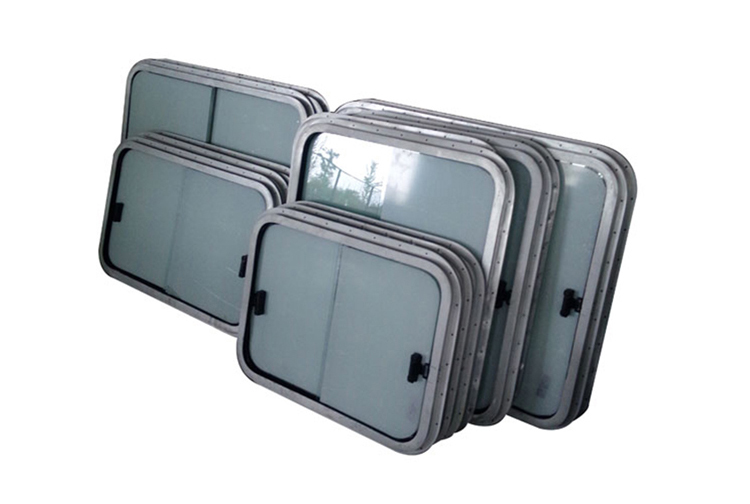
Key Technical Parameters of Qualified Ship Windows
Safety standards are reflected in specific technical indicators. The following parameter table summarizes the core performance requirements for mainstream ocean-going ship windows, which are the key basis for factory inspection and on-site acceptance.
| Performance Index | Standard Requirement (Ocean-Going Vessels) | Testing Basis |
|---|---|---|
| Maximum Water Pressure Resistance | ≥0.12 MPa | ISO 10963:2019 |
| Impact Resistance | Withstand 1kg steel ball free fall impact without cracking | IMO MSC.1/Circ.1414 |
| Salt Spray Corrosion Resistance | No rust or delamination after 500 hours of continuous testing | Classification Society Rules |
| Low-Temperature Resistance | Maintain structural stability at -30°C | ISO 10963:2019 |
| Fragmentation Performance | No sharp broken fragments after damage | SOLAS Convention |
These parameters are not arbitrary values but summarized from decades of marine accident data. Every indicator is designed to cope with extreme marine environments, ensuring that the ship window can maintain stable performance throughout the vessel’s 20 to 30-year service life.
FAQs About Global Ship Window Safety Standards
1. Do all ship windows need to pass IMO certification?
All exterior ship windows used on commercial ocean-going vessels must comply with IMO baseline standards. For inland waterway ships and small recreational yachts, some regions allow appropriately lowered standards, but certified ship window products are still recommended to improve overall vessel safety.
2. What is the difference between coastal and ocean-going ship window standards?
Ocean-going ship windows require higher pressure resistance, corrosion resistance, and low-temperature tolerance due to unpredictable open-sea conditions. Coastal ship windows adapt to relatively mild environments, with slightly lower parameter thresholds, but still need to meet ISO 10963 basic specifications.
3. Can ordinary toughened glass replace professional ship window glass?
Absolutely not. Ordinary toughened glass lacks salt spray corrosion resistance and dynamic water pressure resistance. It cannot withstand long-term marine environmental erosion and will quickly age, blur, or even crack. Only professionally customized ship window glazing meets maritime safety standards.
4. How often do ship windows need safety inspection and replacement?
According to classification society rules, ship windows need a full safety inspection every two years. Windows with surface aging, blurring, or seal failure must be replaced in a timely manner to avoid potential safety hazards during navigation.
5. Are there regional differences in global ship window safety standards?
Regional standards have minor differences in detailed parameters, but the core safety requirements are unified. All international sailing vessels must meet IMO and ISO unified standards, while regional rules are only supplementary optimization for local sea conditions.
To sum up, qualified ship window products are not just simple vessel accessories, but key safety components related to marine navigation safety. Complying with global unified safety standards is the basic premise for ship manufacturing, maintenance, and safe navigation. For ship owners, shipyards, and maritime managers, mastering these standard rules helps select compliant products, reduce navigation risks, and extend vessel service life.