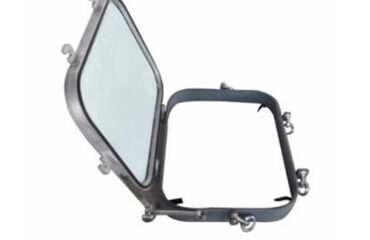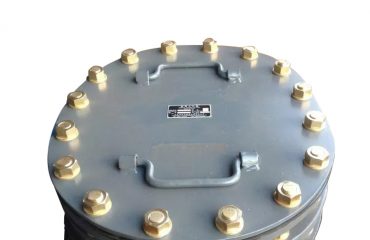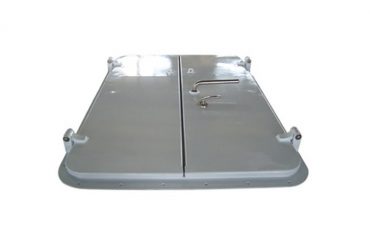


Put your hand on a door gasket that hasn’t been touched in a year and you’ll usually have the answer before you finish reading this. It feels flat, a bit hard, and there’s a thin line of rust sitting on the knife edge behind it. Watertight doors rarely fail dramatically. They get tired, and then one day the bilge alarm tells you about it.
So here is the maintenance method for a ship door, explained the way a deck officer would hand it to a new cadet: what to look at, how often, which numbers are worth remembering, and the habits that quietly ruin a perfectly good door.
Understand What You Are Actually Keeping Alive
A watertight door holds because three things line up: a flexible seal that can be squeezed, a closing mechanism that squeezes it evenly, and a steel frame clean enough for the seal to sit against. Every task below protects one of those three.
Miss one and the door still closes. It just stops holding. That is the trap. A door with a tired gasket looks shut, feels shut, and passes a casual glance, which is why the failure tends to show up during a drill, a hose test, or something you would rather not think about.
Three Rhythms, Not One Big Job
Weekly, or Every Watch on a Busy Door
Work the door by hand at least once a week, all the way open and all the way shut. Listen at the last few centimetres of travel. A dry hinge or a wedge riding up gives a small grinding note that is easy to hear and very cheap to fix. Wipe the knife edge and the coaming with a rag; rust scale, dried cargo residue and leftover paint all sit exactly where the rubber needs to land.
After heavy weather or a long ballast passage, look at the inside of the door first. Water traces low down, salt bloom in the corners and a wet streak under the bottom dog are early warnings, not decoration.
Monthly: Gasket, Dogs and Hinges
Clean the gasket with mild soap and fresh water, then dry it. Never use thinner, solvent, or a strong alkaline degreaser. Rubber cleaned with solvent goes hard within a season, and a hard gasket will never seal again no matter how hard you lean on the handle.
Run a strip of paper around the closed joint. Where it pulls out with even drag you have contact; where it slides out untouched you have a gap. Then look at the compression pattern. A healthy seal shows a continuous band all the way round. Flat spots at the corners, a shiny hard ridge along one edge, or a groove that no longer springs back all mean the same thing: the load is landing in the wrong places.
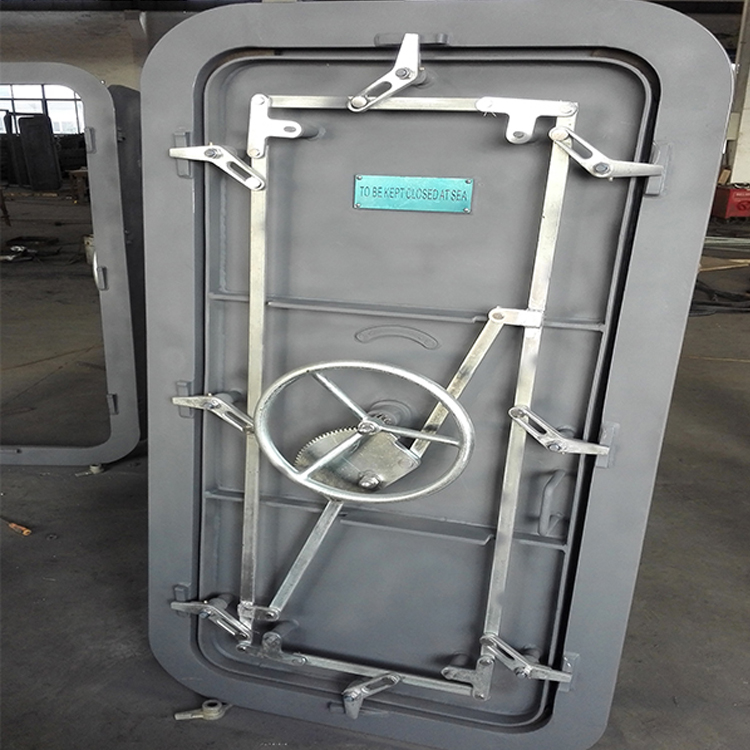
Then the dogs. Every wedge or bolt should come up against the frame with similar effort and reach full contact at roughly the same point in the handle travel. If one dog does all the work, the seal gets squeezed on one side and left loose on the other, and no amount of extra force will fix that.
Grease the hinge pins with water-resistant marine grease, not the ordinary sort that washes out. While you are there, close the door and look at the gap along the top of the leaf. A gap that has grown means a worn pin or bush, and a sagging leaf is one of the most common reasons a ship door that used to be tight starts leaking at the top corner.
Annually, and at Every Dry Dock
This is the survey rhythm. Lift or remove the gasket where the design allows, check the retaining groove for corrosion and old adhesive, and check the knife edge with a straightedge. Replace anything with cuts, tears, or a permanent set beyond about a quarter of its free thickness.
Powered and hydraulic doors need their own checks: manual pump operation, accumulator pressure, alarms, obstruction detection and closing time setting. A hydraulic door that slams is a hazard, not a convenience.
Finish with a real test. A controlled hose test, or a chalk test where the geometry allows it, gives you evidence rather than an opinion.
Reference Values Worth Remembering
Typical figures used in day-to-day inspection. Where the door maker’s manual or the attending surveyor’s criteria differ, those win.
| Check | Typical target | How to verify |
|---|---|---|
| Gasket compression when closed | 25-35% of free thickness | measure free thickness, then estimate squeeze at the joint |
| Gasket hardness | 60-75 Shore A | durometer at several points |
| Permanent set | replace beyond 20-25% | compare free thickness with the original value |
| Joint contact | continuous band, no daylight | paper strip test around the full perimeter |
| Local gap at seal line | 0.10 mm feeler must not pass continuously | feeler gauge, door closed and dogged |
| Dog or wedge contact pattern | 80-90% of pad area | chalk or marking compound |
| Hinge pin radial clearance | 1.5 mm maximum | try gauge, or measure with load off |
| Handle effort, manual door | about 40-80 N, one person, one hand | spring balance on the handle |
| Hydraulic door closing time | 20-40 s, per maker’s setting | stopwatch, three cycles |
| Hose test | 0.2-0.3 MPa, 12-16 mm nozzle, 0.5-1 m standoff | visual check on the dry side |
| Interval | Task |
|---|---|
| Weekly | operate fully, listen, wipe knife edge, inspect after weather |
| Monthly | clean and inspect gasket, paper test, adjust dogs, grease hinges |
| Quarterly | chalk test, check sag, record measurements |
| Annual | lift gasket, inspect groove and knife edge, hose test |
| Dry dock | strip down, renew wear parts, check alignment |
Habits That Kill Doors
Over-tightening is the classic one. When a door leaks, the instinct is to screw the dogs down harder. The leak is nearly always the gasket or the frame, and the extra force only distorts the leaf, makes the door stiff in an emergency and quietly chews the hinges.
Painting the knife edge comes second. A coat of paint is a gap with good manners. Paint on the gasket edge is worse; it hardens the rubber and then flakes into the joint.
Greasing a gasket so it “slides better” comes third. Oil and grease swell and soften some rubbers and harden others, and neither result seals anything.
Then there is the door nobody uses. A watertight door left hooked open for a whole voyage will seize at the hinge and forget how to close, and you find out at the worst possible moment. At sea, doors stay closed unless the ship’s procedures and alarms say otherwise.
Keep the Paperwork Honest
Write it down: door number, location, date, what you checked, what you measured, what you replaced, and the batch number of the spare gasket. Photograph the chalk pattern before you wipe it off. When a surveyor asks whether a door has been maintained or merely painted, a clean log answers in ten seconds.
FAQ
How often should a watertight door be inspected?
Work it weekly, inspect it monthly, survey it annually. Add a check after grounding, flooding, contact, major hull work, or any repaint near the frame, because those events change the geometry the seal depends on.
What usually makes a watertight door leak?
In rough order of frequency: a hardened or permanently set gasket, uneven dog load, rust or paint on the knife edge, hinge wear that lets the leaf sag, and frame distortion from welding or impact. A blocked drain plug on the coaming can also make a sound door look like a leaking one.
Can a gasket be replaced on board?
Usually yes, if the right spare is carried and the groove can be cleaned properly. The corners matter most, so follow the maker’s splicing or vulcanising method. Never stretch the gasket along the groove to make it fit; it will shrink back and leave a gap within weeks.
Why is the handle getting harder to turn?
Rising effort is a symptom, not normal wear. It points to hinge or bush wear, a swollen gasket, or a leaf that is no longer square in its frame. Forcing it makes all three worse.