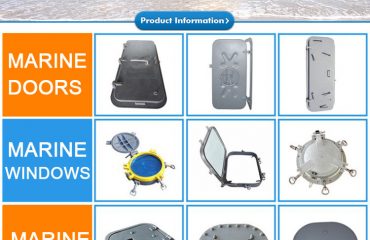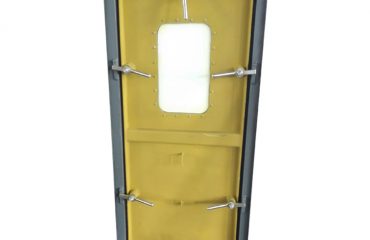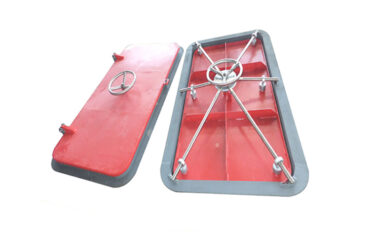


Many shipbuilders and vessel operators ask whether these marine openings can hold back water and stand up to years of salty air. The simple answer is yes, but only when built from the right marine materials, sealed properly and installed to match the vessel’s operating zone. Not every glazed opening you see on a boat has the same watertight or corrosion protection, and that difference matters a lot for long-term reliability.
How Watertight And Saltwater Resistance Are Built Into Marine Glazing
Watertight performance does not come from a single coating or one seal strip. It is a system of frame material, gasket design, glass selection and sealing geometry that works together. High-grade marine frames use alloys engineered to slow galvanic corrosion, paired with closed-cell EPDM gaskets that stay flexible even after repeated compression and UV exposure. These gaskets form the primary water barrier, while secondary sealant layers block fine salt mist from reaching the frame joints.
Saltwater resistance focuses on stopping chloride ions from eating into metal surfaces. Even small surface scratches can become corrosion hotspots if the protective finish is damaged. The table below lists typical technical parameters for standard marine glazed assemblies that meet common classification society testing rules.
| Parameter | Standard Marine Glazing Specification |
|---|---|
| Primary frame material | 316L stainless steel / A5083 marine aluminium |
| Gasket material | EPDM marine grade |
| Design test pressure | 25 kPa static water pressure |
| Glass type | Thermally toughened safety glass |
| Salt spray test duration | 1000 hours neutral salt spray |
| Operational temperature range | -20°C to +60°C |
| Governing standard | ISO 3903, SOLAS Chapter II-1 |
It is important to separate weathertight from fully watertight ratings. Weathertight openings keep rain and spray out, while watertight assemblies are built to resist temporary immersion and higher wave impact loads. This distinction affects placement on the vessel; openings low on the hull or near vulnerable deck spaces require a higher rated assembly. Ship windows built for exposed upper deck locations are usually upgraded with thicker glass and reinforced corner joints to handle frequent wave splash.
Common Weak Points That Break Water And Salt Protection
Even a well-made unit can start leaking or corrode if installation or upkeep slips. The most frequent failure point is the rubber gasket. Over time, UV radiation, salt crystal buildup and repeated opening cycles make the gasket harden, shrink or crack. Once a gap opens, saltwater creeps behind the frame and attacks the fasteners and flange.
Improper bedding and sealant application is another common issue. If the mating surface is not fully cleaned and degreased before fitting, the sealant will not bond evenly. Small voids under the frame become hidden channels for saltwater. Operators also sometimes overlook minor chips in paint or passivation layers. A tiny scratch on an aluminium or stainless frame can start rust staining that spreads slowly through the whole fitting.
Mechanical stress also plays a role. Vessel hulls flex under sea loads, and glazing must be mounted with enough flexibility to move with that flex without pulling the seal apart. Rigid over-bolting can pinch the gasket and destroy its sealing function the moment the hull twists in rough seas.

FAQ About Watertight And Saltwater Resistant Marine Glazing
1. Does every marine glazed opening carry the same watertight rating?
No. Ratings change based on the vessel’s zone, design pressure and intended service. Openings on superstructure upper decks may be weathertight only, while those closer to the waterline or on certain working craft need formal watertight certification. Classification surveyors review the rating and location before sign-off, so matching the rating to the installation position is critical.
2. Can salt spray eventually damage the frame and glass?
Salt spray will not damage toughened safety glass itself, but it can degrade frame hardware, gaskets and fasteners if maintenance is skipped. Regular washing with fresh water removes surface salt deposits before crystals dig into protective coatings. If salt is left to build up for months, pitting corrosion on stainless steel or aluminium frames becomes much harder to reverse.
3. What kind of routine checks preserve watertight performance?
Visual inspections should look for gasket cracking, discoloured sealant, rust streaks around bolt holes and fogging between laminated panes. All mating surfaces should be rinsed with fresh water after heavy offshore runs. Gaskets are usually replaced every few years, depending on sun exposure and salt load. Any sign of persistent dripping or spray penetration should trigger a pressure re-test before the vessel returns to sea.
4. Can I replace a standard opening with a higher watertight version without hull modification?
Not always. The surrounding hull structure, flange thickness and bolt pattern must support the higher design pressure. Simply swapping to a higher-rated unit on a weak, unmodified cutout can create a false sense of safety. A naval architect or surveyor should review the cutout and supporting structure before any upgrade.