

There is a moment every boat owner knows. You are out on the water, the weather turns, and suddenly you notice the windows are not holding up the way they used to. Maybe there is a hairline crack, maybe a slow drip during a hard rain, or maybe the frame is just too corroded to trust anymore. Whatever the sign, the thought that crosses your mind is the same: these need replacing.
And that is exactly where the trouble often starts. A boat window is not a car window. You cannot simply order a glass panel, wedge it in, and call it done. Everything about it, from the material to the seal to the exact measurement, is shaped by the boat and the conditions it faces. This article goes through what to sort out before you cut a single opening, so you replace once and replace right.
Why Replacing Boat Windows Is Different
The first thing to understand is that a marine window does more than let in light. It has to keep water out in a storm, take the force of waves, resist salt, and hold its shape as the hull flexes and the temperature swings. An ordinary window simply is not built for that, and neither is a rushed install.
Get the basics wrong, and the new window becomes a source of leaks, corrosion, or worse, a safety issue out on the water. That is why the planning stage matters more than the installation itself.
Key Specifications to Compare Before You Replace
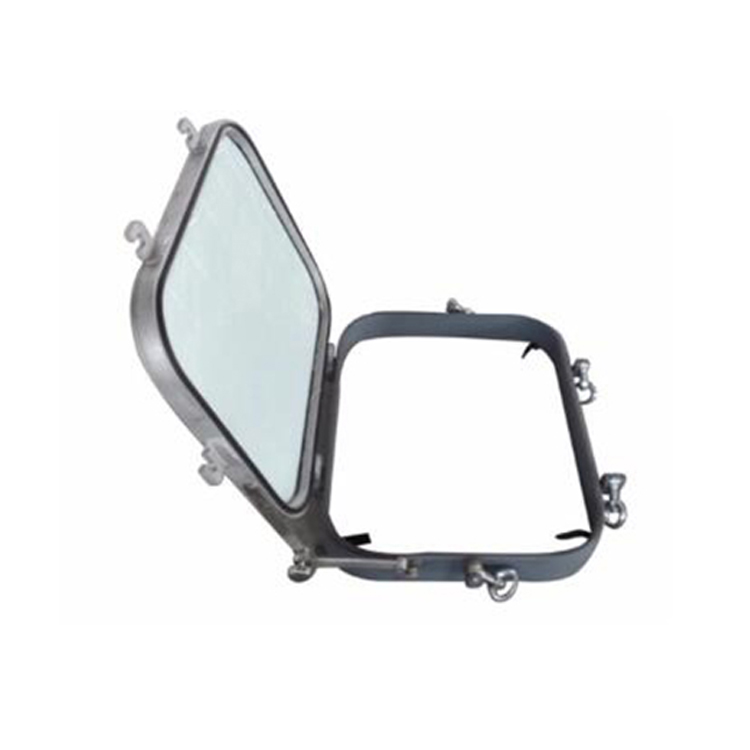
Before you order anything, settle these numbers. They are the ones that decide whether the replacement fits and holds up.
| Specification | Typical Range | Why It Matters |
|---|---|---|
| Glazing Material | Tempered glass / Marine-grade acrylic | Tempered resists impact; acrylic is lighter and shatter-resistant |
| Frame Material | Marine aluminum / Stainless steel | Both resist salt corrosion better than plain steel |
| Glass Thickness | 6 – 12 mm | Thicker glazing handles impact and pressure better |
| Sealing System | Neoprene / EPDM gaskets | Seals must withstand UV, salt, and temperature swings |
| Watertight Rating | IP66 or higher | Confirms protection against strong water jets and rain |
| UV Resistance | High / Coated | Prevents yellowing and cracking over years in sunlight |
| Shape & Size | Custom / Curved | Fits your specific opening; never guess dimensions |
The single most common mistake is skipping the measurement. Marine windows are often curved or irregular, so a tape measurement on site beats any catalog number.
Material Choices: Glass or Acrylic?
This is usually the first decision people make, and it shapes everything else. Tempered glass is heavier, scratch-resistant, and keeps its clarity for years, which makes it a strong choice for larger openings where visibility matters. Marine-grade acrylic is lighter, shatter-resistant, and easier to shape into curves, which suits hatches and tight spaces.
There is no universal winner. The right material depends on the location, the size, and how much the window will take. It is worth asking an installer which one fits your boat’s needs rather than picking purely on looks.
Frame and Seal: The Parts People Forget
A window is only as good as its frame and its seal. The frame carries the glazing and ties it to the hull, so it needs to handle salt and flexing without failing. The seal keeps water where it belongs, so it has to survive years of sun, rain, and temperature changes.
The two together decide whether your new window is watertight or slowly becoming a headache. When you compare options, pay as much attention to the gasket and frame specs as you do to the glass itself.
How to Measure and Plan the Replacement
Measure twice, cut once applies to boats more than almost anything else. Record the opening width, height, and depth, and note whether the corners are square or curved. Check the hull thickness where the window sits, because that decides which frame type will fit. And factor in how the window opens, if at all, since a fixed pane behaves very differently from a hinged one.
Taking a clear photo of the old window and its mounting area is a small habit that saves a lot of confusion later. It helps an installer see exactly what they are working with before they arrive.
Installation and Common Mistakes to Avoid
Once the window arrives, the work needs care. The old seal has to be removed cleanly, the opening checked for corrosion, and the new unit bedded in the right compound and torqued to spec. Rushing any of these steps invites the exact leak you were trying to fix.
The three mistakes we see most are guessing dimensions, choosing the wrong glazing for the location, and skimping on the seal. Each one is avoidable, and each one is cheaper to prevent than to fix.
Frequently Asked Questions
1. How do I know when my marine windows need replacing?
Look for hairline cracks, fogging between panes, leaking during rain, or corrosion around the frame. If any of these shows up, a replacement is worth planning.
2. Can I measure marine windows myself?
You can take rough measurements, but curved or irregular openings should be confirmed by a professional. An on-site measurement is the only reliable way to avoid a bad fit.
3. What is the best material for boat windows?
It depends on the opening. Tempered glass resists scratches and keeps clarity; marine-grade acrylic is lighter and shatter-resistant. The right choice depends on size, location, and how much the window will face.
4. How long do marine windows last?
With proper care, well-installed windows last many years, but the seal and gaskets wear out sooner and should be inspected regularly, especially in harsh saltwater conditions.
5. Can I replace marine windows myself?
It is possible for simple flat units, but curved glazing, large panes, and complex seals usually need a professional to guarantee a watertight fit.