

Pressure rating refers to the maximum water pressure a marine door can withstand without permanent deformation or water penetration. For maritime vessels, floating platforms and offshore facilities, sudden wave impact and hull tilting generate strong instantaneous water pressure on bulkhead doors. Ordinary visual inspections cannot detect hidden sealing weaknesses or structural tolerance errors.
Verifying pressure ratings ensures that the door fully meets maritime safety standards and actual operating conditions. A qualified quick action watertight steel door must maintain structural stability and complete watertightness under rated pressure. Skipping formal verification may result in unqualified safety assessments, onboard water ingress, and potential structural damage during long-term navigation.
Core Pressure Rating Verification Standards and Classification
Hydrostatic Pressure Testing Principles
Hydrostatic pressure testing is the most authoritative and widely adopted verification method for marine watertight doors. The test simulates real underwater pressure environments by applying continuous and stable water pressure on the door surface. Inspectors observe whether water seepage, sweating, structural deformation or gasket displacement occurs within the specified holding time.
This static test effectively reproduces the pressure load caused by hull flooding and wave impact. It accurately judges the overall tightness and structural bearing capacity, avoiding safety hazards caused by insufficient pressure resistance in actual marine environments.
Marine Pressure Rating Classification Parameters
Different installation positions on the ship correspond to different standard pressure levels. The following parameter table lists mainstream pressure grades, test depths, holding time and applicable scenarios, providing reliable data support for field verification and acceptance.
| Pressure Grade | Test Water Depth | Test Holding Time | Applicable Installation Area |
|---|---|---|---|
| Level A | 3m | 30 minutes | Upper deck and non-critical bulkhead positions |
| Level B | 6m | 30 minutes | Ordinary cabin and side bulkhead areas |
| Level C | 10m | 60 minutes | Lower hull and key watertight compartment bulkheads |
Step-by-Step Field Pressure Verification Process
- Pre-Test Structural Inspection
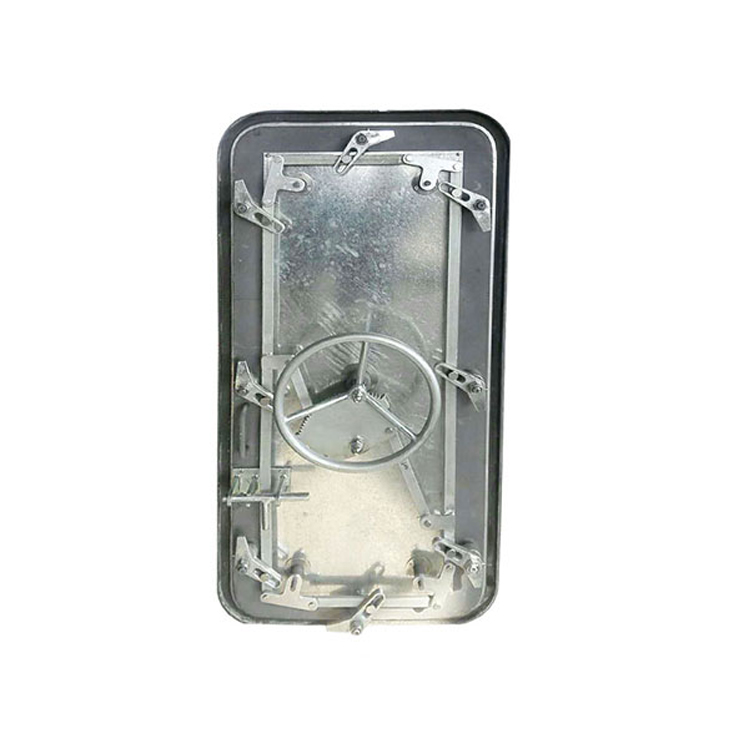
Before pressure testing, check the overall condition of the door body, frame, quick locking mechanism and rubber gaskets. Confirm no deformation, gasket aging, foreign matter adhesion or loose locking parts. The quick closing structure must flexibly reset and lock tightly, ensuring uniform compression on the entire sealing surface. - Sealing and Baffling Setup
Install professional water baffling tools on the pressure-bearing side of the door to form a closed test space. Seal all gaps around the door frame to prevent auxiliary leakage that may affect test results. Ensure the test area is clean and free of debris interference. - Gradual Pressure Loading
Avoid rapid pressurization during testing. Increase water pressure step by step according to the corresponding grade standard, maintaining stable pressure growth. Gradual loading protects the door structure from instantaneous impact damage and ensures accurate test data. - Constant Pressure Holding and Observation
After reaching the rated test pressure, keep the pressure stable for the specified duration. Carefully observe every position of the door surface, frame joints and locking gaps. Qualified products show no water seepage, droplet condensation or structural deformation during the whole process. - Pressure Relief and Post-Test Inspection
Release pressure slowly after the test is completed. Check again whether the door body has permanent deformation, gasket displacement or loose fasteners.
Common Errors in Pressure Rating Verification
Many on-site test failures stem from non-standard operation rather than product quality problems. Shortening pressure holding time, uneven pressurization, incomplete gap sealing and ignoring pre-test gasket inspection will all lead to inaccurate verification results. These irregular tests cannot truly reflect the actual waterproof performance of the door under marine working conditions.
Frequently Asked Questions
- Can visual inspection replace formal pressure testing?
No. Visual checks only observe surface conditions and cannot detect micro gaps and pressure resistance defects. Only standard hydrostatic pressure testing can verify whether the pressure rating meets maritime safety requirements. - Does every installation position require the same pressure grade?
No. Upper decks, ordinary cabins and lower hull compartments bear different water impact pressures. It is necessary to select matching test standards according to the actual installation position to complete accurate verification. - How often should pressure rating verification be conducted?
Regular verification is required during annual ship inspection, periodic maintenance and after door repair or replacement. Long-term navigation and mechanical vibration may cause sealing fatigue, leading to reduced pressure resistance performance. - What problems will unqualified pressure testing cause?
Unqualified pressure resistance will cause water seepage in stormy weather or hull inclination, damaging cabin equipment and affecting navigation safety. It will also cause the vessel to fail official safety inspections.