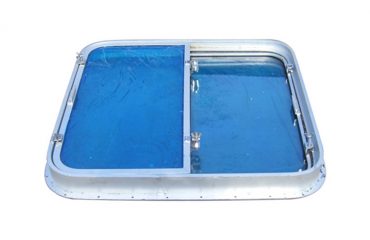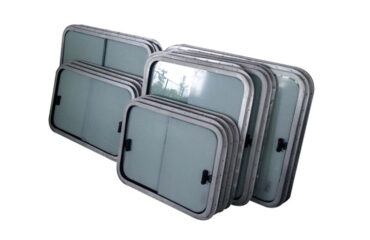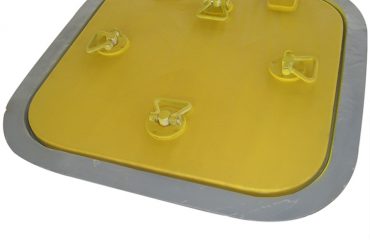


If you have ever wondered what keeps ships safe during rough seas or sudden onboard fires, the answer often lies in small but critical components: the ship door. Most people overlook ship door functionality, but these marine-specific doors are the first line of defense against flooding and fire spread on all types of vessels. In modern marine engineering, every new ship door design strictly follows professional watertight and fire safety standards, and this trend is not optional—it is essential for vessel compliance, crew safety, and long-term maritime operation.
Core Reasons for Strict Ship Door Safety Design Standards
Marine environments are far harsher than ordinary building environments. Ships face constant challenges including violent waves, high humidity, corrosive seawater, and sudden fire risks during long-distance voyages. A standard industrial door cannot adapt to these extreme working conditions, so professional ship door designs must meet dual watertight and fire safety requirements.
From a regulatory perspective, the International Maritime Organization (IMO) has issued clear rules under the SOLAS convention, mandating that all commercial vessels must install certified safety ship door products. Beyond regulatory compliance, practical maritime accident data also proves that unqualified ship door structures are one of the main causes of ship sinking and fire escalation. Upgrading and standardizing ship door design has therefore become a core part of modern ship safety optimization.
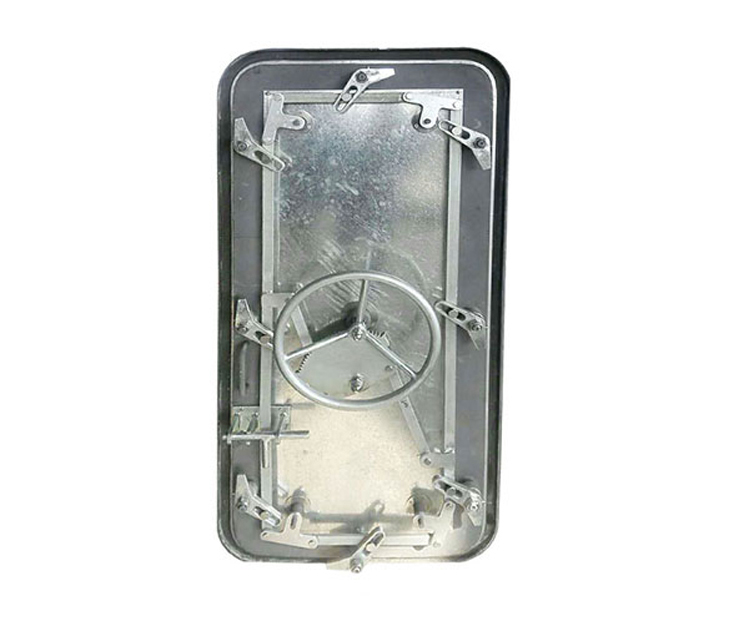
Key Performance Parameters of Qualified Safety Ship Door
To meet watertight and fire safety standards, modern ship door products have fixed industry performance parameters. These standardized indicators are verified through professional testing and classification society certification, ensuring stable and reliable safety performance in extreme marine scenarios. The core parameters are listed in the table below:
| Performance Item | Standard Parameter | Compliance Basis | Functional Description |
|---|---|---|---|
| Watertight Pressure Resistance | WT30/WT50 (3.0m/5.0m water head) | IMO MSC.380(94) | Resists seawater pressure to prevent cabin flooding in storm conditions |
| Fire Resistance Grade | A60 (60-minute fire insulation) | SOLAS Chapter II-1 | Blocks flame spread and controls temperature rise within safe range |
| Maximum Temperature Rise | Average <140°C, single point <180°C | Marine fire test standard | Avoids high-temperature damage to cabin equipment and crew injury |
| Automatic Closing Time | ≤90 seconds (remote control) | SOLAS mandatory regulation | Rapid closure to isolate dangerous cabins during emergencies |
| Waterproof Rating | IPX6/IPX8 | ISO 20653 | Prevents rainwater and splashing seawater from penetrating the door gap |
All modern compliant ship door products must pass hydrostatic pressure tests and standard fire resistance tests before leaving the factory. The hydrostatic test adopts 1.5 times the design water head pressure for 30-minute continuous detection, ensuring no visible water leakage and stable structural performance.
Difference Between Traditional and Modern Ship Door Designs
Old-fashioned ship door designs focused more on basic sealing and structural firmness, ignoring integrated fire protection and extreme environmental adaptability. Many early ship doors only achieved simple waterproof effects and lacked fire-resistant insulation layers and automatic alarm linkage functions.
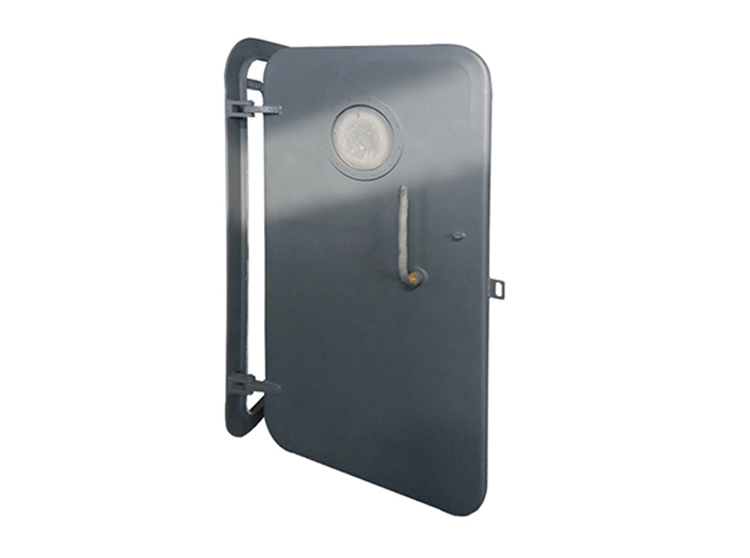
Modern ship door designs adopt an integrated safety structure, combining stainless steel anti-corrosion shells, high-temperature resistant fire insulation materials, and multi-channel compression sealing systems. In addition to basic watertight performance, they add remote control closing, pre-alarm prompt, and 15-degree ship tilt normal closing functions. These optimized designs enable the ship door to maintain stable safety performance in complex and extreme marine environments that traditional products cannot cope with.
FAQs About Modern Ship Door Safety Standards
1. Why do ship door fire resistance grades mainly adopt A60 standard?
The A60 fire resistance grade is the most widely recognized marine fire safety standard by IMO and major classification societies. It can maintain complete structural integrity and heat insulation performance within 60 minutes of fire exposure, providing sufficient time for crew fire fighting, emergency evacuation, and ship risk control. This grade balances safety performance and ship load weight, making it the optimal choice for commercial and engineering vessels.
2. What is the core difference between watertight and weathertight ship door?
Watertight ship door is designed for deep cabin bulkheads, capable of resisting continuous seawater pressure and preventing cabin flooding during hull water ingress. Weathertight ship door is mainly used for deck and outer wall positions, resisting splashing seawater and storm erosion. The watertight structure has higher pressure resistance and stricter sealing standards than weathertight products.
3. How often should a standard safety ship door be inspected and maintained?
According to marine safety regulations, ship door safety components need daily routine inspection, including sealing strip tightness, alarm system sensitivity, and automatic closing function. A comprehensive professional inspection and performance test must be conducted every six months, and aging sealing parts and fire insulation materials should be replaced regularly to avoid performance degradation.
4. Can modified ordinary doors replace professional ship door?
Absolutely not. Ordinary doors lack anti-corrosion treatment, fire insulation structure, and professional watertight sealing design, and cannot meet SOLAS and IMO certification requirements. Unqualified door modifications will lead to vessel inspection failure and bring huge safety hazards to maritime navigation.
5. What certifications do qualified modern ship door need to obtain?
Formal ship door products must pass ISO 17941 marine standard certification, IMO MSC.380 safety certification, and classification society certification such as CCS. Only products with complete certification documents can be installed and used on commercial vessels for transoceanic navigation.