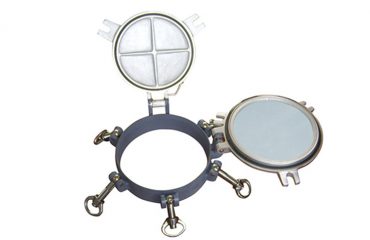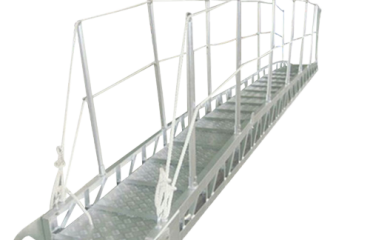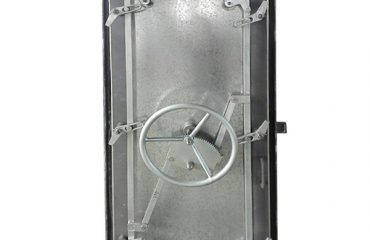


Marine-grade ship doors are specially manufactured for harsh offshore and coastal marine environments, different from ordinary industrial doors. Their watertight performance refers to the ability to resist specified hydrostatic water pressure and block water penetration under both normal sailing and accident conditions. Qualified ship doors can maintain complete compartment isolation even when part of the hull is flooded, preventing water from spreading to adjacent cabins.
This performance is not a basic accessory function but a core safety attribute required by international maritime regulations. Unlike weathertight doors that only block rain and sea spray, watertight ship doors withstand continuous water pressure from hull breaches, making them indispensable for vessel damage stability.
| Technical Parameter | Standard Requirement | Functional Description |
|---|---|---|
| Maximum Hydrostatic Pressure Resistance | 0.1–0.3 MPa | Withstands water pressure equivalent to 10–30 meters water depth, adapting to most hull compartment flooding scenarios |
| Seam Leakage Rate | 0 mL/min under rated pressure | No water penetration or seepage through door seams after 30-minute pressure holding test |
| Operating Temperature Range | -20℃ to 60℃ | Stable watertight performance in extreme cold and high-temperature marine environments |
| Regulatory Compliance | SOLAS & MSC.1-Circ.1564 | Meets international maritime safety guidelines for ship door installation and operation |
Vessels that fail to meet these parameters will face port inspection failures and hidden safety hazards. Even minor seepage can accumulate over time, corroding cabin equipment and damaging hull structural stability.
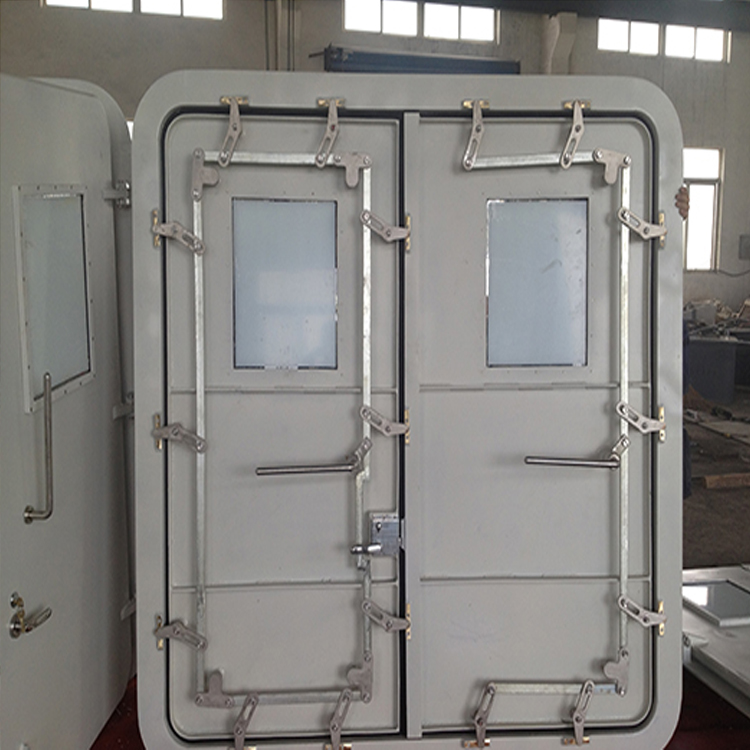
Why Watertight Performance Determines Vessel Safety & Compliance
Emergency Flooding Risk Control
Ship collision, grounding, and hull cracking are common maritime accidents. Once the hull is damaged, seawater floods into damaged cabins rapidly. High-performance watertight ship doors can isolate flooded compartments instantly, limiting the flooding range effectively. This isolation prevents the entire vessel from losing buoyancy and stability, buying precious time for crew evacuation and rescue operations.
Long-Term Structural & Equipment Protection
Poor watertight performance does not only cause risks in emergencies. During daily navigation, persistent tiny water seepage invades electrical cabins, storage compartments, and crew living areas. Long-term moisture erosion accelerates metal rusting, circuit aging, and mechanical equipment failure. Maintaining stable watertight performance of ship doors is a low-cost and high-efficiency way to extend vessel service life.
Strict International Maritime Compliance
IMO and SOLAS regulations clearly stipulate the watertight standards and daily management rules for ship doors. Many ship detention cases worldwide stem from unqualified watertight performance or irregular door operation. Vessels with substandard ship doors will be refused port entry, causing economic losses to shipping companies and affecting operational schedules.
Common FAQ About Watertight Performance of Ship Doors
To solve daily confusion for maritime practitioners, we sort out five high-frequency practical questions based on industry standards and maintenance experience.
Q1: What is the difference between watertight and weathertight ship doors?
Weathertight ship doors only resist surface seawater spray and rainwater for daily ventilation and passage. Watertight ship doors bear formal hydrostatic pressure, suitable for watertight bulkhead positions below the waterline. They are irreplaceable in emergency flood isolation.
Q2: How often should ship door watertight performance be tested?
According to maritime inspection norms, routine watertight tests should be conducted every six months. Comprehensive pressure tests and sealing component replacement must be completed during annual vessel surveys to ensure stable performance.
Q3: What are the main causes of degraded watertight performance?
Aging and deformation of rubber sealing gaskets, loose locking mechanisms, foreign object jams on door seams, and long-term salt corrosion are the top four causes of performance degradation. Most watertight failures come from insufficient daily maintenance rather than product quality defects.
Q4: Can damaged watertight ship doors be repaired on site?
Minor sealing aging and loose locking parts support on-site repair and adjustment. If the door body is deformed or the pressure resistance fails the test, professional factory repair or direct replacement is required to avoid safety risks.
Q5: Do all ship doors need full watertight performance?
No. Deck doors above the waterline usually only need weathertight performance. Only bulkhead doors crossing watertight compartments and underwater passage doors must meet standard watertight pressure resistance requirements.
Practical Tips to Maintain Ship Door Watertight Performance
Good watertight performance relies more on standardized maintenance than initial product quality. First, clean door seams and sealing gaskets regularly to remove salt deposits and debris that cause gaps. Second, check locking handles and hydraulic or pneumatic closing devices to ensure tight door closure without gaps. Third, replace aging rubber gaskets regularly, as salt fog and temperature changes will gradually reduce gasket elasticity.
In addition, crews must follow operational norms. Many navigation accidents occur because crew members leave watertight ship doors unclosed. Standardized operation and regular testing together sustain long-term reliable watertight performance.