

Marine watertight doors work in extremely harsh environments, facing constant seawater erosion, high humidity, wave impact and frequent opening and closing. Over time, rubber seals age, hardware fasteners loosen, and door frame deformation slowly appears. Unlike ordinary building doors, marine watertight equipment bears strict water pressure impact, so minor structural gaps will directly turn into leakage points.
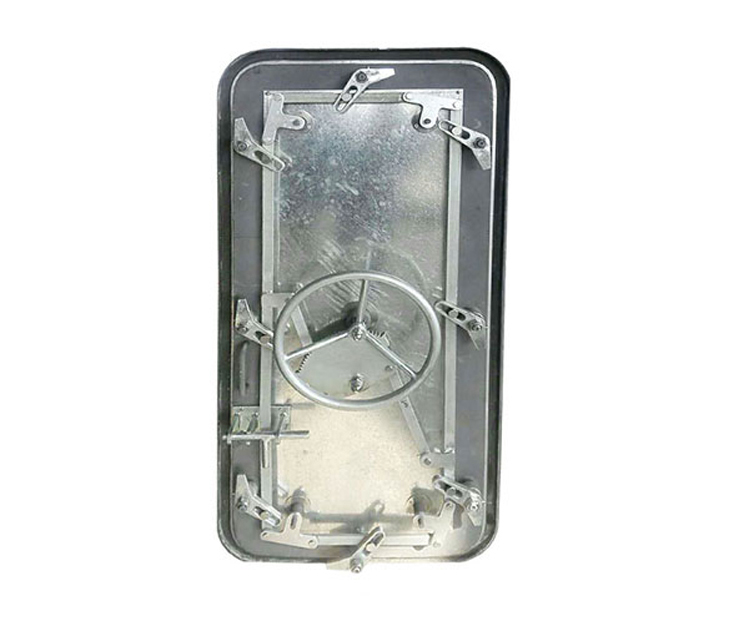
A qualified quick action watertight steel door is designed with high-strength steel structures and compression sealing systems to meet ship classification standards. However, without regular maintenance, its original watertight performance will gradually decline. Early small leaks will eventually evolve into continuous seepage, affecting cabin dryness, accelerating steel plate corrosion, and even endangering vessel navigation safety in severe weather.
Standard Maintenance Parameters and Inspection Benchmarks
Professional marine maintenance follows unified industry parameters to judge door sealing performance and component health. Quantitative inspection standards avoid subjective judgment errors and ensure every potential leak point is fully checked. The following table lists core maintenance parameters and qualified thresholds for daily and periodic upkeep:
| Inspection Item | Qualified Standard | Abnormal Risk Value | Leakage Impact |
|---|---|---|---|
| Seal Rubber Aging Degree | No cracking, hardness deviation ≤5° Shore A | Surface cracking, hardness deviation >10° Shore A | Uneven compression, gap water seepage |
| Door Frame Deformation Tolerance | Flatness error ≤2mm per meter | Flatness error >3mm per meter | Local fitting gap causes persistent leakage |
| Locking Mechanism Tightness | Full compression without loose clearance | Visible shaking or incomplete locking | Failed pressure resistance, wave splash leakage |
| Surface Corrosion Area | No pitting or rust accumulation | Corrosion area >3% of contact surface | Damaged sealing interface, poor fitting |
| Opening/Closing Flexibility | Smooth switching without jamming | Stuck operation or delayed reset | In-place closing failure, hidden water ingress risk |
Key Maintenance Steps to Effectively Prevent Door Leakage
- Regular Seal Cleaning and Aging Inspection
The rubber sealing strip is the core watertight component and the most vulnerable part of the entire door system. Dust, salt crystals and marine attachments will accumulate on the seal surface after long-term marine operation, forming tiny gaps between the door and frame. Maintenance staff should clean the seal strip with neutral cleaning solution monthly to remove salt dirt and residual attachments. Meanwhile, check for dry cracking, peeling and permanent deformation. Replace aging seals in a timely manner to ensure complete compression fitting. - Hardware and Locking System Calibration
Quick locking handles, compression bolts and hinge structures will loosen slightly after frequent operation. Incomplete compression is one of the top causes of intermittent leakage. During daily maintenance, workers need to check all locking points and hinges, tighten loose fasteners, and calibrate the compression stroke of the locking mechanism. This ensures the door can achieve uniform surface compression after closing, eliminating gap leakage caused by uneven stress. - Door Frame Flatness Correction and Anti-Corrosion Treatment
Steel door frames are prone to local deformation under long-term wave impact and hull structural vibration. Slight frame bending will destroy the original sealing flatness. Regular visual inspection and straightness measurement are necessary. For minor deformation, perform mechanical correction to restore flatness. In addition, polish rusted areas and apply marine anti-corrosion paint regularly to prevent pitting corrosion from damaging the sealing contact surface. - Periodic Watertight Pressure Testing
Daily visual checks cannot detect hidden leakage risks under water pressure. It is necessary to conduct regular hydrostatic testing or spray testing according to ship maintenance specifications. Simulate actual sea wave pressure conditions to verify overall sealing performance. Record test data and repair tiny leakage points immediately before they develop into major faults.
Common Maintenance Mistakes That Aggravate Leakage
Many leakage failures stem from incorrect maintenance habits. Simply replacing damaged seals without calibrating locking compression will not solve fundamental gap problems. Over-tightening the locking mechanism to stop leakage will cause excessive seal extrusion deformation and accelerate aging. Ignoring frame corrosion cleaning will lead to repeated leakage even after new seal installation.
Scientific and standardized maintenance can maximize the service life and watertight performance of a quick action watertight steel door, reducing unplanned maintenance costs and improving vessel navigation safety.
FAQs About Watertight Door Maintenance and Leak Prevention
- How often should the watertight door seal be replaced?
Under normal marine operating conditions, the rubber seal needs replacement every 2 to 3 years. If the vessel operates in high-salinity offshore areas, annual inspection and irregular replacement are recommended based on aging status. - Can minor frame deformation cause obvious water leakage?
Yes. Even 2-3mm of uneven flatness will break the overall compression balance of the seal strip, forming continuous tiny gaps that lead to seawater seepage during wave impact. - Why does the door leak after seal replacement?
Mostly caused by uncalibrated locking stroke or residual corrosion on the frame surface. Cleaning the contact surface and recalibrating locking compression can solve most post-replacement leakage problems. - Is regular pressure testing necessary for daily maintenance?
Absolutely necessary. Pressure testing can detect hidden leakage defects that visual inspection cannot find, ensuring the door maintains standard watertight performance in extreme sea conditions.