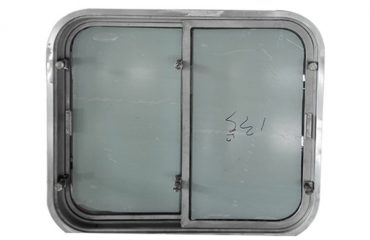


Marine navigation environments feature strong waves, splashing seawater, humid air and frequent wind pressure changes, which put forward extremely strict waterproof requirements for hull exterior components. Unlike ordinary architectural windows installed in stable environments, marine windows must maintain long-term weathertight performance under continuous vibration, salt corrosion and alternating pressure.
Most leakage problems do not appear immediately after installation. Instead, they slowly develop during sea trials and long-term navigation. Unstandardized installation damages the original sealing structure of marine windows, creating tiny gaps that gradually expand under wave impact and hull deformation. Eventually, these gaps turn into stable water seepage channels that affect cabin dryness and internal equipment safety.
Standard Installation and Waterproof Parameters for Marine Windows
Professional marine assembly follows unified industry waterproofing and installation standards. The following technical parameters are widely adopted in ship outfitting projects, providing reliable reference for standardized construction and error checking.
| Installation Technical Index | Standard Requirement | Waterproof Function |
|---|---|---|
| Frame Mounting Gap | 2mm – 4mm uniform gap | Reserve space for waterproof filler to avoid rigid extrusion deformation |
| Sealant Application Thickness | 3mm – 5mm continuous layer | Ensure full perimeter sealing without breakpoints or bubbles |
| Fastener Torsion Uniformity | Even stress, no over-tightening or loose points | Prevent frame distortion and uneven gasket compression |
| Installation Flatness Deviation | ≤1.5mm per meter | Guarantee complete gasket fitting and consistent waterproof pressure |
| Post-installation Water Test Pressure | 0.15MPa splash resistance test | Verify weathertight performance under simulated storm wave conditions |
Five Typical Installation Mistakes That Cause Marine Windows Leakage
- Incomplete Perimeter Sealing and Discontinuous Sealant Layers
Many leakage cases stem from careless sealant construction. Some installers only apply sealant on visible outer edges while ignoring corner gaps and hidden frame joints. Broken sealant lines, tiny bubbles and insufficient glue thickness create invisible leakage channels. Under repeated seawater splashing and hull vibration, these weak sealing points gradually fail, allowing water to penetrate into the cabin. Continuous, bubble-free full-perimeter sealing is the most basic yet critical step for marine-grade waterproofing. - Uneven Fastener Tightening and Frame Distortion
Excessively tight or loose bolts are another common installation error. Over-tightening local fasteners will twist the metal frame, causing partial gasket compression and gaps in other areas. Loose fasteners fail to maintain stable pressing force, leading to gap expansion during hull deformation. Either condition breaks the uniform fitting state between the window frame, gasket and hull plate, resulting in intermittent water leakage during navigation. - Ignoring Surface Cleaning and Anti-Corrosion Treatment
Salt residue, rust spots and dust on the hull mounting surface seriously affect sealing adhesion. If the base surface is not thoroughly cleaned and polished before installation, the sealant and gasket cannot bond firmly with the metal substrate. Marine humid and salty environments accelerate interface peeling, forming micro gaps between the frame and hull. This hidden construction mistake causes delayed leakage that is hard to detect in the short term. - Incorrect Gasket Installation and Extrusion Deviation
The rubber gasket is the core waterproof component of marine windows. Random gasket placement, distortion, local overlapping or extrusion deviation during installation will destroy the original uniform waterproof structure. When the ship sails in rough seas, the unevenly stressed gasket cannot resist dynamic water pressure, leading to water seepage from gaps. Many people attribute leakage to aging accessories, while the real cause is irregular installation operation. - Neglecting Post-Installation Water Pressure Testing
Skipping professional water splash and pressure testing after installation is a major hidden danger. Visual inspection cannot identify tiny sealing defects. Only through simulated high-pressure water testing can breakpoint gaps and weak waterproof areas be exposed. Construction teams that skip testing often leave latent leakage risks, which will break out during stormy weather or long-distance navigation.
Practical Solutions to Avoid Installation-Related Leakage
Targeted corrections for the above mistakes can greatly improve the long-term waterproof performance. First, thoroughly polish and clean the mounting base surface to ensure no salt dirt or rust residue. Second, apply continuous and uniform marine-specific waterproof sealant to form an integral sealing layer. Third, tighten fasteners symmetrically and evenly to avoid frame distortion. Finally, complete standard water pressure testing to confirm no seepage before delivery and operation.
FAQs About Marine Windows Leakage and Installation
- Why do newly installed marine windows leak only in stormy weather?
This situation is usually caused by incomplete sealing and uneven gasket compression. Under normal calm sea conditions, static water pressure is low with no obvious seepage. However, strong wind and wave impact in stormy weather generates dynamic water pressure that squeezes water through tiny installation gaps, resulting in obvious leakage. - Can leakage be fixed simply by reapplying surface sealant?
It depends on the root cause. If the leakage comes from internal frame gaps, distorted frames or loose gaskets, simple surface glue repair cannot solve the fundamental problem. It is necessary to readjust the frame flatness, reposition the gasket and perform full-perimeter resealing to eliminate hidden dangers. - How to distinguish product quality problems from installation errors?
Regular installation errors usually cause local, intermittent leakage related to sailing conditions. Quality defects often lead to large-area, continuous seepage even in static environments. Uniform frame stress and complete sealing construction can eliminate over 90% of daily leakage failures. - How often should installed marine windows be inspected for waterproof performance?
It is recommended to conduct a comprehensive waterproof inspection every six months, focusing on sealant aging, gasket elasticity and fastener tightness. Regular maintenance can repair tiny installation attenuation problems in advance and avoid progressive leakage failure.