

On the vast and boundless ocean, ships are extensions of human technology and will, like moving steel islands. In this complex structure and unique environment, there is a type of element that is crucial but often overlooked – they are not massive hosts or sophisticated radars, but rather the silent marine doors that pervade the entire ship. These doors are far from simple opening and closing components. They define the internal spatial order of ships, forge safety boundaries, and serve as invisible shields against harsh marine environments. Every detail of its design, materials, and craftsmanship profoundly affects the overall performance, operational efficiency, and crew safety of the vessel.
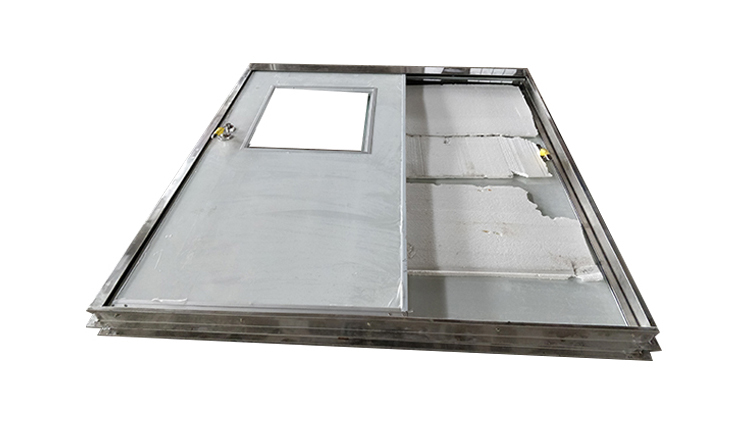
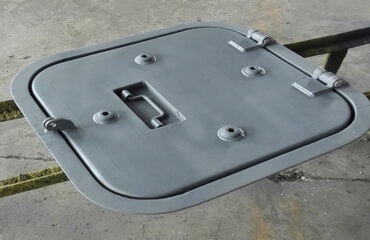
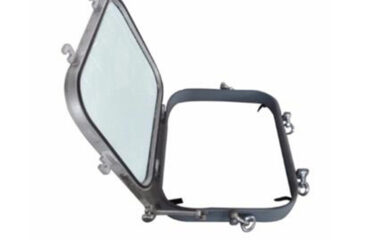
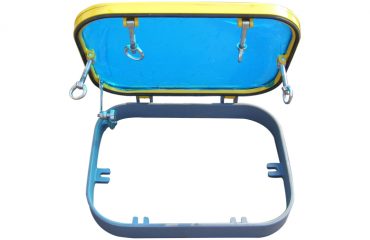
Based on the differences in functionality and application scenarios, marine doors have a clear classification system. Among them, watertight doors are a key defense line to ensure the safety of ships. Their core function is to prevent seawater from spreading between compartments and prevent the ship from losing stability due to a large amount of water ingress when the ship encounters accidents such as collision or reef damage. These types of marine doors need to have strong sealing performance and structural strength, and be able to withstand water pressure impacts within the design range when closed. Modern ships’ watertight doors are usually equipped with dual control systems, which can be centrally controlled from the bridge or manually operated on site to ensure quick closure in emergency situations. In addition, airtight doors are also an important functional type, mainly used in cabins that require high environmental stability, such as ship laboratories, electronic equipment cabins, etc. By blocking air circulation, specific air pressure, temperature, and humidity inside the cabin are maintained to ensure the normal operation of precision instruments.
In addition to safeguarding security, the marine door is also a ‘coordinator’ of functionality and efficiency. Ship space is precious, and the opening and closing methods, occupied volume, and operating procedures of doors need to be accurately calculated. Sliding or folding doors can save space to the greatest extent possible in narrow corridors or aircraft cabins with dense equipment; Heavy hinged doors with good balance and buffering devices are more suitable for areas that require fast passage and isolation; For certain special places, such as hospitals, kitchens, or laboratories, the design of doors also needs to meet specific functional requirements such as cleanliness, airtightness, or corrosion resistance. These doors are like precise transportation hubs, ensuring efficient and orderly flow of personnel, goods, and information within the closed system of the ship, without interfering with the integrity of independent operations in each area.
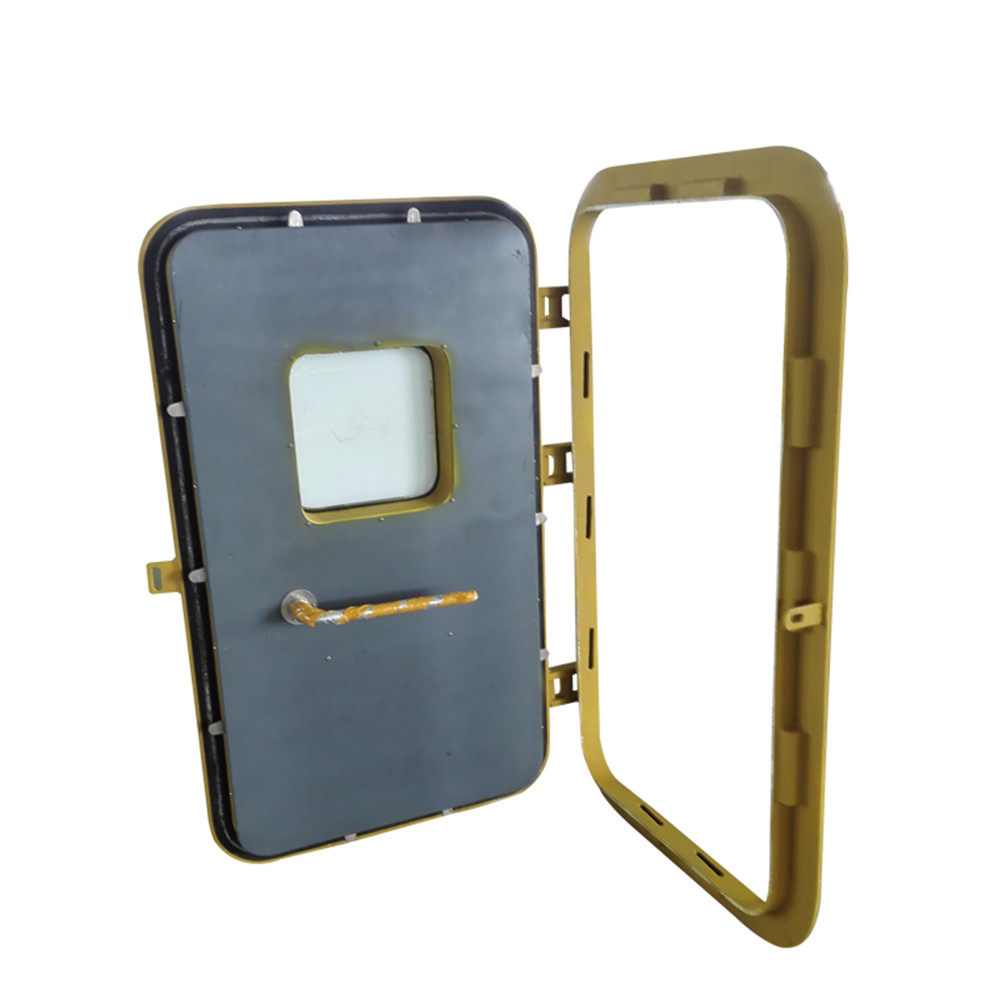
Material selection is the foundation for ensuring the performance of marine doors, and it needs to be fully adapted to the harsh environment of high salt spray, high humidity, and strong corrosion in the ocean, while meeting the strength and functional requirements of different areas. Steel materials have become the mainstream choice for marine doors due to their high strength, good toughness, and impact resistance, especially suitable for key protective parts such as watertight doors and fire doors.
After special strengthening treatment, steel marine doors can effectively resist the impact of waves and high temperatures caused by fires, providing valuable time for crew members to escape and extinguish fires. Aluminum alloy materials are widely used in residential cabins and other areas due to their lightweight advantages. Their excellent corrosion resistance can reduce erosion in marine environments, while also reducing the overall weight of ships and improving navigation efficiency and fuel economy. In recent years, fiber-reinforced composite materials have gradually been applied in the manufacturing of marine doors. These materials combine lightweight, high strength, and corrosion resistance, further expanding the range of material choices for marine doors.
Marine door is a microcosm in ship engineering that integrates safety science, material technology, mechanical design, and regulatory management. They stand still in every corner of the cabin, and every opening and closing of their daily routine is smooth and seamless, seemingly unremarkable. However, it is within this silence and reliability that lies the cautious wisdom and comprehensive defense of humanity when facing the deep ocean. They are not only the opening and closing of physical channels, but also loyal sentinels of navigation safety, steadfastly guarding the internal order of ships and the safety of everyone during every long journey of departure and return to port.